Weighted Jump Rope for Weight Loss: What It Actually Does
Here is the mechanism, stated plainly: weight loss is driven by a sustained calorie deficit, and no rope, weighted or not, changes that math directly. What a weighted jump rope can do is make your cardio sessions more demanding per minute, which is genuinely useful if your current workouts feel too easy to move the needle, or if you are short on time and want more intensity packed into fewer minutes. This page walks through how that works, how it compares to a standard rope, and a simple routine to start with.
🚨 Only a few left in stock
Why intensity matters more than the clock
A lot of people trying to lose weight default to long, low-effort cardio: a slow jog, an easy bike ride, a rope session at a lazy pace. That approach works, but it is slow, and it is easy to quit when results feel invisible for weeks. The alternative that shows up constantly in strength and conditioning circles — including boxing gyms and CrossFit programming — is short, high-intensity intervals: work hard for a defined burst, rest briefly, repeat.
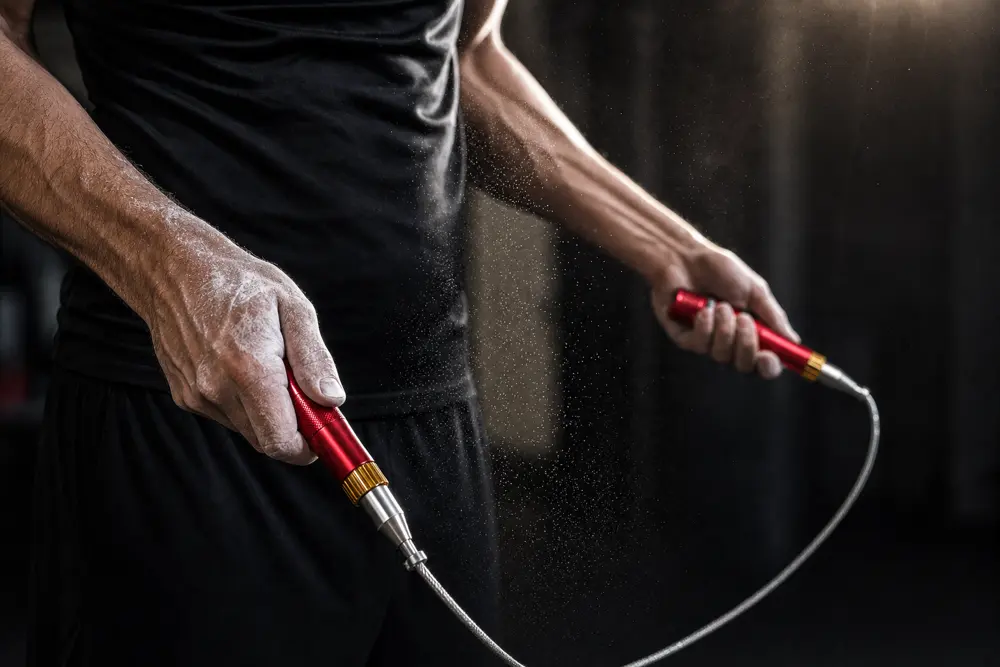
A jump rope is already a solid tool for this because it demands full-body coordination and keeps your heart rate up fast. Adding removable weight to the handles, plus two swappable cables that are both heavier than a standard speed rope, raises the floor on how hard a given round feels. You cannot really "cruise" through a set with a weighted rope the way you can with a featherweight speed rope — your arms tell you immediately when you slow down or lose form. That built-in feedback is, honestly, the main practical benefit: it nudges lower effort into higher effort without you having to think about it.
None of this means the weighted rope is magic. It means it is a way to make an already-decent cardio tool slightly harder to phone in. If you are already training at a high intensity with a standard rope, the difference will be smaller. If your current sessions are relaxed, the jump in perceived effort is usually noticeable within the first few rounds.
Weighted rope vs a standard rope: the comparison
Calorie burn depends on your body weight, your pace and how long you keep going — a jump rope session is simply one of the densest ways to spend fifteen minutes. What we can compare honestly is the training experience, based on the same coordination pattern with a different load.
| Factor | Standard / speed rope | Ironpace weighted rope |
|---|---|---|
| Arm & shoulder demand | Low — light cable, minimal resistance | Higher — removable weight in the handles plus a heavier cable load the shoulders on every rotation |
| Turnover speed | Very fast, favors double-unders and speed drills | Slower, more controlled reps — favors steady conditioning over sheer speed |
| Coasting risk | Easy to go through the motions at low effort | Harder to coast; a slack swing is immediately obvious |
| Best for | Footwork, speed, boxing-style rhythm work | Interval conditioning, shoulder/core endurance, home HIIT sessions |
| Learning curve for beginners | Lower — light rope is more forgiving | Slightly higher — start with the thinner of the two included cables |
Several buyers who left feedback made a related point without us prompting it: the rope is "identical to the description and to that other super expensive rope," and one specifically called out that "the cables are heavy" — both send with the order, one thinner and one thicker, so you can start light and move to the heavier cable once your form holds up. Neither cable nor the handle inserts come with an exact weight figure on the spec sheet; we describe them as removable and heavier than a standard rope because that is what we can verify, not because we are being cagey.
A simple 15-minute routine to start with
This is not a program you need a coach to run. It is deliberately short so you can actually repeat it three or four times a week, which matters more for weight loss than any single brutal session.
| Block | Work | Rest | Rounds |
|---|---|---|---|
| Warm-up | Easy jumping, thinner cable, relaxed pace | — | 2 minutes |
| Interval block | 40 seconds jumping at a hard, sustainable pace | 20 seconds walk/rest | 8 rounds (~8 min) |
| Burnout set | 30 seconds max-effort jumping | 30 seconds rest | 3 rounds |
| Cooldown | Easy jumping or walking, shake out shoulders | — | 2 minutes |
If your form breaks down before the interval block ends — rope catching your feet, shoulders giving out — that is useful information, not failure. Drop to the thinner cable, shorten the work interval to 30 seconds, and build up over a few weeks. For a slower on-ramp, our beginner's guide covers grip, stance, and how to avoid the most common early mistakes.
Where weighted cardio fits in a weight-loss plan
A weighted jump rope is one lever, and it is worth being exact about which one. It will not fix a diet that runs a calorie surplus, will not spot-reduce fat from any one area of your body, and will not replace sleep, protein intake, or basic strength training if those are missing from your routine. What it reasonably contributes is a denser, more demanding cardio session in a short window — useful if intensity, not time, is your bottleneck. That is the lever this rope pulls, and the interval routine above is how to pull it.
It is also worth being realistic about pace of change. Cardio intensity affects how many calories a session burns, but weight change over weeks and months is dominated by what happens outside the workout — meals, sleep, daily activity. Treat the rope as one lever among several, not the whole machine.
By the numbers
verified reviews behind this exact rope
— Ironpace order history, 2026
average rating across those verified reviews
— Ironpace order history, 2026
units sold to date
— Ironpace sales record, 2026
What buyers actually said about the effort level
Instead of inventing testimonials, here is what verified buyer feedback on this exact rope actually reports: "The additional weight inside the handle can be removed. Perfect for training." Another buyer flagged the cable weight directly: "The rope bearing is very good, but the cables are heavy. They send two, one thinner and one thicker, both are quite heavy." That matches our own read — start light, add resistance once the movement feels controlled, not before. You can read more feedback on our reviews page.
Free shipping · 30-day money-back guarantee
Related reading
For more on the mechanics of why the added resistance changes the workout, see our full breakdown of weighted jump rope benefits. If you want structured sessions beyond the routine above, our workout routines guide covers boxing-style and conditioning-style formats. Deciding between the two included cables? We cover that in choosing your cable weight, and if you are still comparing a weighted rope to a lightweight speed rope generally, read weighted vs speed rope.
Curious how we arrived at the claims on this page? See how we test, learn more about the team behind Ironpace on our about page, or contact us directly. Shipping timelines are listed in our shipping policy, and every order is covered by the terms in our refund policy.

Derek Malone · Strength coach & product lead at Ironpace
Derek has coached boxing and CrossFit conditioning for over a decade.
Reviewed and updated July 5, 2026.
Weighted jump rope weight-loss FAQ
Will a weighted jump rope alone make me lose weight?
No single tool does that. Weight loss comes down to burning more calories than you take in over time. A weighted rope is a way to make cardio sessions more demanding in less time — it is a tool for the workout side of that equation, not a replacement for the diet side.
Is a weighted jump rope better than a standard rope for cardio?
Both raise your heart rate. A weighted rope adds resistance to every swing, so your shoulders, forearms, and core work harder to keep the rope moving — many buyers describe it as a tougher, more full-body version of the same skipping motion, not a different exercise.
How long should a weight-loss jump rope session be?
Most people can sustain 12-20 minutes of interval-style jumping. Consistency across weeks matters more than any single session length — three or four 15-minute sessions a week beat one exhausting hour-long attempt that leaves you too sore to repeat it.
Can beginners use a weighted rope for weight loss workouts, or should they start lighter?
Beginners can use it, but should start with the thinner of the two included cables and shorter work intervals. If your form breaks down (rope hitting your feet, shoulders burning out fast), that is a sign to shorten the round before you shorten the rest.
Free shipping · 30-day money-back guarantee