· Derek Malone
Weighted vs Speed Rope: Which One Do You Need?
This question comes up constantly from people shopping our weighted jump rope page for the first time: "isn't a regular speed rope enough?" It's a fair question, and the short answer is that it depends entirely on what you're training for. Below is the actual difference — no hype, no pretending one rope does everything.
What's Actually Different Between a Weighted and a Speed Rope
A speed rope is built to disappear. The cable is thin, the handles are nearly weightless, and the whole point is that you stop noticing the rope so your wrists can spin it as fast as possible. That's what lets someone string together fifty double-unders without their shoulders giving out first.
A weighted rope flips that priority. The cable itself is noticeably heavier than a standard speed cable, and the handles carry removable weight inserts you can pull out to lighten the tool or leave in to load it up. You feel the rope on every rotation — through your forearms, wrists, and shoulders — which is the point. It turns a cardio tool into a conditioning tool.
| Factor | Speed rope | Weighted rope (Ironpace) |
|---|---|---|
| Cable | Thin, minimal drag | Heavier cable, felt on every swing |
| Handles | Near-weightless | Removable weight inserts inside the handle |
| Bearing | Fast-spin ball bearing | Ball bearing, tuned for control over raw speed |
| Learning curve | Fast to pick up double-unders | Slower cadence, more deliberate reps |
| Best for | Cardio, agility, boxing footwork drills | Grip strength, shoulder endurance, tempo work |
Speed Ropes: Built for Turnover, Not Load
If your goal is raw conditioning volume — long unbroken sets, double-unders for a CrossFit WOD, or footwork drills between rounds — a speed rope is the right tool. The lack of resistance is a feature, not a shortcoming. You want minimal fatigue in the forearms so the limiting factor is your cardio, not your grip giving out at rep 200.
Where a speed rope falls short is strength carryover. Coaches who only ever jump light rope for years often still have soft grip endurance and weak forearm stability compared to boxers who mix in loaded work. Speed builds speed. It doesn't build the tissue that holds up under load.
Weighted Ropes: Built for Resistance and Control
A weighted rope trades some turnover speed for load. Every swing works your forearm flexors, wrist stabilizers, and shoulders in a way a two-ounce cable never will. That's why boxing gyms and CrossFit conditioning blocks use them as a warm-up or finisher: it's low-impact resistance work disguised as cardio.
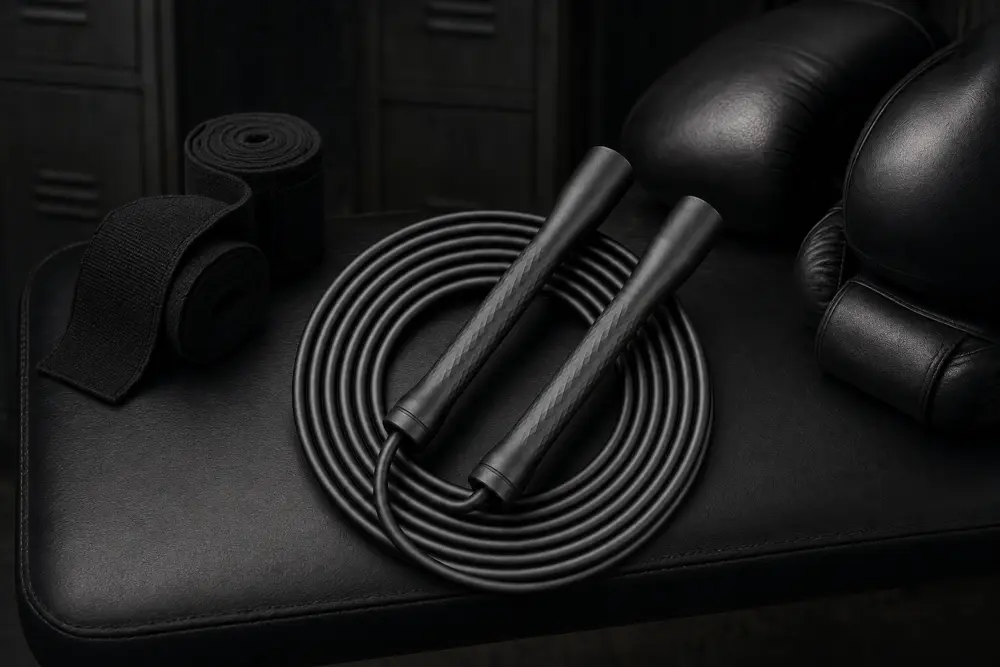
It's also slower to learn. New buyers who jump straight into a heavy cable expecting speed-rope cadence usually get frustrated in the first session — the rope demands a shorter, more controlled swing. That's not a flaw, it's a different skill. Give it two or three sessions before judging it.
Can You Train With Both? Yes — Most Serious Athletes Do
This isn't really an either/or decision for anyone training seriously. Boxing coaches routinely program a weighted rope for the first two or three rounds of a warm-up to load the shoulders and grip, then switch to a light speed rope for the technical rounds where turnover and double-unders matter. CrossFit athletes do something similar: weighted work early in a session, speed work when the metcon calls for volume.
If you can only own one rope and you already do bodyweight cardio elsewhere, a weighted rope gives you something a speed rope can't: a resistance stimulus in a piece of equipment that fits in a bag. If your training already includes plenty of strength work and you just need conditioning volume, a speed rope is the lighter, cheaper answer.
How Ironpace's Dual Cable System Splits the Difference
We sell the Ironpace Weighted Jump Rope — Dual Cable System specifically because most people don't want to buy two separate ropes. It ships with two cables — one thinner, one thicker — and both are noticeably heavier than a stock speed cable, so you're never getting a "light" experience, but you do get a choice in how much resistance you're working against on a given day. The handles hold removable weight inserts, so you can strip them down for a faster-paced session or leave the weight in for a grinding, strength-endurance set.
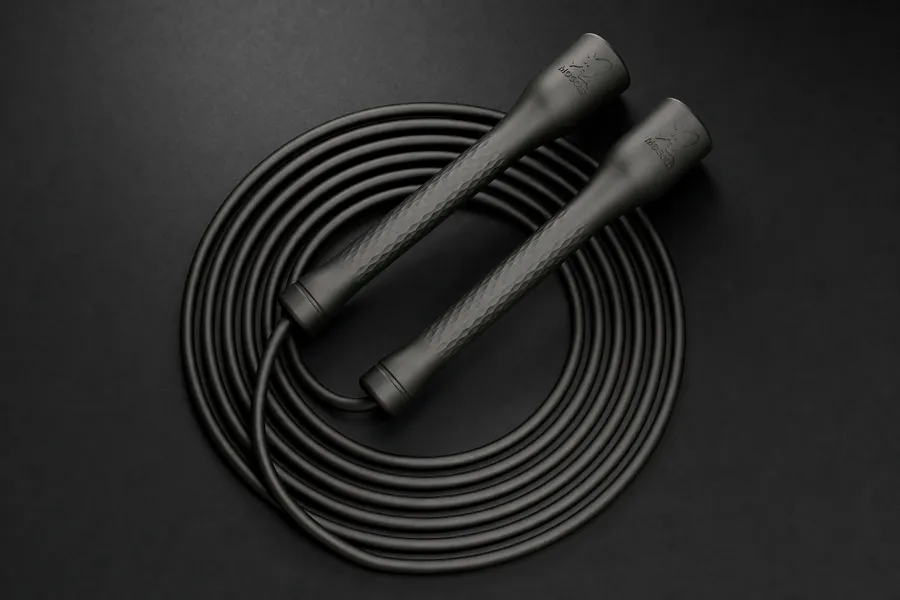
It's not marketed as a speed rope — if double-unders at a competitive cadence are your entire goal, a dedicated ultra-light speed cable will still turn over faster. But for the conditioning work that most home gyms, boxing sessions, and CrossFit warm-ups actually call for, the dual-cable setup covers more ground than either extreme on its own.
Which One Should You Buy First?
| Your goal | Start with |
|---|---|
| Double-unders, competition speed work | A dedicated light speed rope |
| Grip, forearm, and shoulder conditioning | A weighted rope |
| General home-gym cardio + some resistance | Ironpace's dual-cable weighted rope |
| Boxing warm-up into technical rounds | Both — weighted first, speed second |
Read our beginner's guide if this is your first rope of any kind, or our weighted jump rope for weight loss guide if conditioning and calorie burn are the main driver. If you're deciding between cable thicknesses on the Ironpace rope itself, see our guide to choosing your cable weight.
What Ironpace Buyers Actually Say
We don't inflate this. Across verified buyer feedback, the rope holds a strong track record — and the comments back up the "it's genuinely heavier than a normal rope" positioning rather than any speed-rope comparison.
Verified buyer reviews on the Ironpace Dual Cable System
— Ironpace verified buyer feedback, 2026
Average rating across those verified reviews
— Ironpace verified buyer feedback, 2026
Units sold to date
— Ironpace order history, 2026
One recurring theme in buyer comments: "the cables are heavy — they send two, one thinner and one thicker, both are quite heavy." That's consistent with what this article is telling you: this is not a speed rope with some weight bolted on. It's a weighted rope, full stop. If you want a true speed-rope feel, that's a different product.
The Bottom Line
Neither rope is "better." A speed rope trains turnover and cardio efficiency. A weighted rope trains grip, forearm, and shoulder endurance at a more controlled pace. Most serious athletes eventually own both — but if you're choosing one to start, match it to the quality you're actually missing in your training, not to whichever one looks more advanced.
Questions about sizing or shipping timelines? Check our contact page, our shipping policy, or our 30-day refund policy — every Ironpace order is covered by it. You can also browse full verified reviews or read more on the benefits of weighted jump rope training and who's behind Ironpace.

Derek Malone · Strength coach & product lead at Ironpace
Derek has coached boxing and CrossFit conditioning for over a decade.