· Derek Malone
Can You Do Double Unders With a Weighted Rope?
This is the most common question we get from people already jumping rope who are looking at a weighted jump rope. They want the resistance, but not at the cost of the skill they worked hardest to build.
What a double under actually asks of the rope
A double under means the cable passes under your feet twice on a single jump. That definition is the whole problem: your air time barely changes, but the rope now has to travel twice as far inside it. Everything that slows the cable down works against you. A thicker cable, more mass in the handles, a bearing that hesitates, any of them costs you the fraction of a second the second rotation needs.
That is the tension here. A weighted rope is engineered to slow the swing down on purpose, because a slower, loaded swing is what puts work into your forearms and shoulders. A double under needs the swing to speed up. The two goals pull in opposite directions, which is why the honest answer is a setup answer rather than a yes or a no.
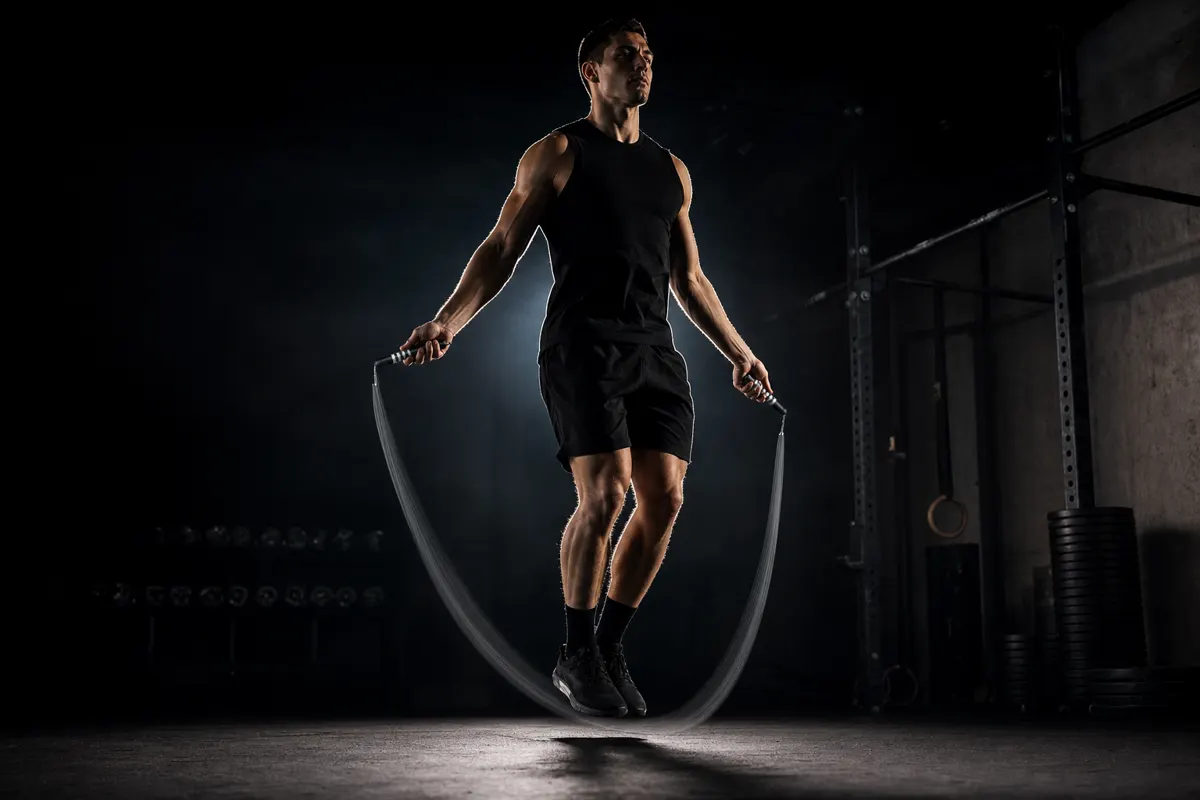
Yes, on the lightest setting of the Dual Cable System
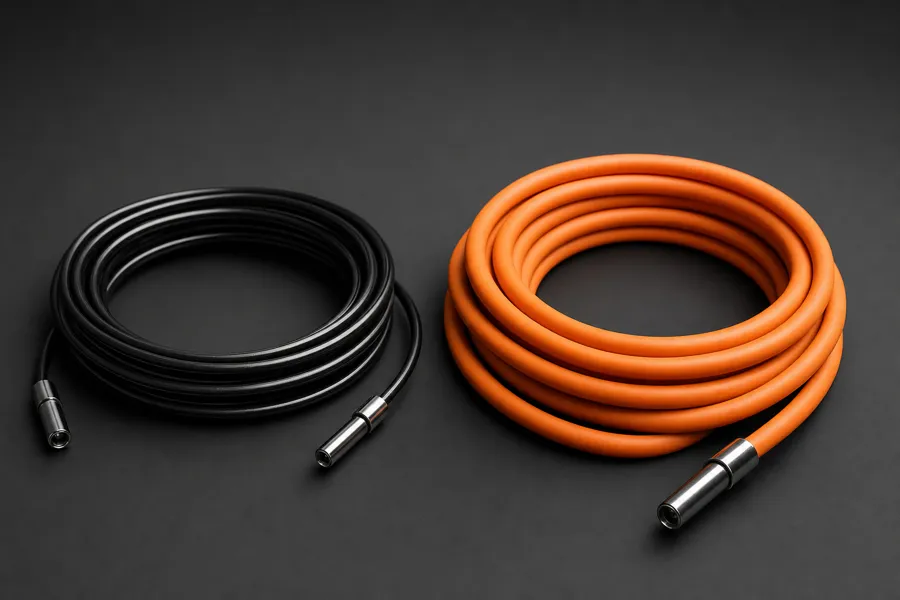
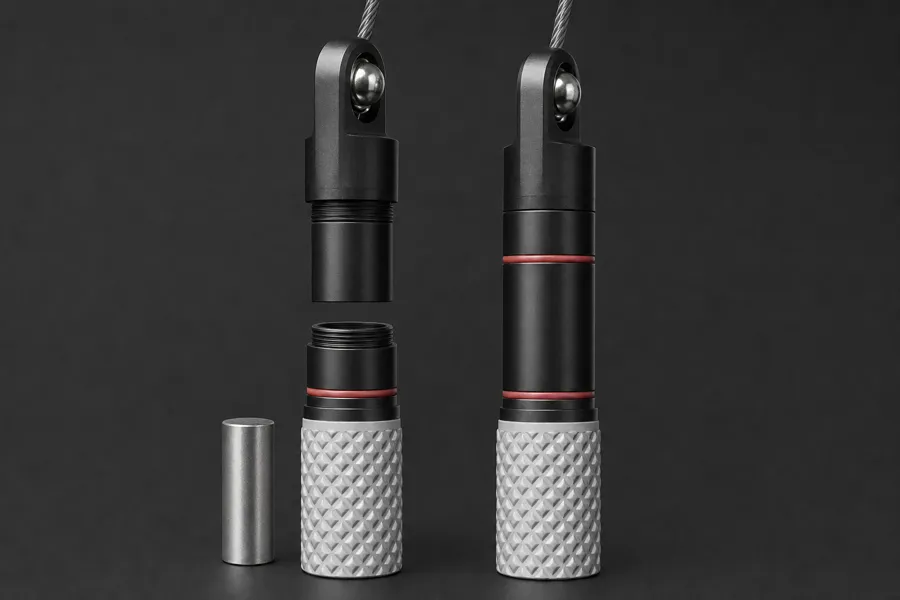
The Ironpace rope ships with two cables and a removable weight insert inside each handle, which gives you four configurations rather than one fixed feel. Only one of them is a realistic double under setup: the thin cable with the weight pulled out. That is the closest this rope gets to a standard speed rope, and it is the configuration we point people toward when double unders are on the session plan.
Even there, expect it to feel heavier than the plastic rope you learned on. Both cables that ship with this rope are heavier than a standard speed cable, and we will not pretend otherwise on our own product page. The thin cable gives you enough turnover to clear two rotations once your jump height and wrist drive are consistent, but not the effortless whip of a dedicated competition cable.
What happens when you try it on the thick cable
Not much that is useful, in most hands. The thick cable with the weight installed is the heaviest combination this rope offers, and in our own testing we keep it to rounds of 60 to 90 seconds of conditioning work rather than skill work. Trying to pull double unders out of that setup plays out the same way every time: the cable arrives late, you jump higher to buy time, form comes apart by the third or fourth rep, and the cable catches you across the calves.
If double unders are what you came for, the thick cable is the wrong tool, and we would rather say so than sell you on a rep you are not going to hit. What each cable is genuinely built for is covered in our guide on choosing your cable.
Which setup can actually do it
| Setup | Double unders | What to expect |
|---|---|---|
| Thin cable, weight out | Workable | The only setup we would program them on. Still heavier than a speed rope. |
| Thin cable, weight in | Hard | Turnover holds up, forearms fatigue fast across a set. |
| Thick cable, weight out | Not realistic for most | Timing rarely survives past a few reps. |
| Thick cable, weight in | No | Built for short conditioning rounds, not skill work. |
Where this gets people hurt
Double unders are a repeated near maximal jump, and adding resistance to one is the kind of thing that turns a good session into three weeks off. The load lands in predictable places. Calves and the Achilles tendon take the repeated landings, and more of them, because you are jumping higher than you would on singles. Wrists and forearms carry more because a heavier cable pulls harder at the end of every rotation. Shoulders creep into the swing once the wrists tire, and once the shoulders are driving the rope, the rope is driving you.
Then there is the miss itself: a heavier cable across a bare calf stings a great deal more, and flinching away from it is where awkward landings come from.
We are coaches rather than clinicians, and nothing here is medical advice. Burning is information; pain in a joint or a tendon is a stop signal, and it belongs with someone qualified rather than with a jump rope website. If you are new to rope work, our beginner's guide covers building the base before you add load to a skill you are still learning.
The removable weight is the whole point here
This is where an adjustable rope earns its place over a fixed weighted one. The insert inside each handle comes out, so a session that starts with double unders on the light setup can finish loaded, without a second rope in the bag. Skill work while you are fresh, resistance once the technical part is done.
We do not publish a gram or pound figure for that insert or for either cable, because our manufacturing partner does not give us one, and inventing a number would be worse than admitting we do not have it. What we test instead is how the resistance behaves across a real training block, set out on our how we test page. If exact specs matter for your program, get in touch before ordering and we will ask the manufacturer.
What buyers say about the timing adjustment
The learning curve on the heavier cable is the most repeated note in our verified feedback, and it lines up with everything above. One buyer put it this way: "Both cables that ship with it are heavier than a standard speed rope, exactly as advertised. It took me a couple of sessions to adjust my timing, but now it is part of my warm-up every single time." Another named the cable directly: "Solid build, and swapping between the thin and thick cable takes seconds. My only note is the thicker cable takes a session or two to get the timing right if you are used to a lighter rope."
The bearing draws the opposite reaction: "Bearing rotation is excellent, no snag and no catch, even after a few weeks of daily footwork drills. This is the best rope I have owned for skip-and-shuffle work." A bearing that catches ends a double under before your feet do.
Verified buyer reviews on file for this rope
— Ironpace order history, 2026
Average rating across those verified purchases
— Ironpace verified buyer feedback, 2026
Cable and handle-weight combinations the Dual Cable System allows
— Ironpace product specification, 2026
Full write-ups, including the four-star notes, are on our reviews page.
Should you buy this rope if double unders are the goal?
If double unders for time are the entire reason you are shopping, buy a dedicated light speed cable instead. It is cheaper, it turns over faster, and it serves that one goal better than any weighted rope including ours. We would rather tell you now than process a return in three weeks.
Where this rope makes sense is the week that holds both: a skill block where you want turnover, and a conditioning block where you want resistance. That is the actual argument for a dual-cable setup, and the same reasoning runs through our weighted versus speed rope comparison. For ready-made interval structures, start with our workout routines guide, or browse the rest of the guides. It is $49.99 with free US shipping in 8 to 10 business days, and a 30-day money-back guarantee under our refund policy.
Double under FAQ
Can you do double unders with a weighted jump rope?
Yes, on the light end of the setup: the thin cable with the handle weight removed. With the thick cable and the weight installed, the cable travels too slowly to clear two rotations in one jump for most people.
Is a weighted rope harder for double unders than a speed rope?
Considerably. Both cables on our rope are heavier than a standard speed cable, so it asks for more jump height and more wrist drive. If double unders are all you train, a dedicated light speed cable will turn over faster.
Should I learn double unders on a weighted rope first?
We would not recommend it. Learning the skill on a light cable and adding resistance afterwards is the sequence that goes better in practice.
Will a heavier rope make my double unders stronger?
We are coaches, not a lab, and we will not promise a carryover we cannot measure. Weighted rope work is reasonably good at grip and shoulder endurance at a controlled cadence. Whether that shows up in your double under numbers depends on far more than the rope you own.

Derek Malone · Strength coach & product lead at Ironpace
Derek has coached boxing and CrossFit conditioning for over a decade. He tests every rope Ironpace sells through real training blocks — bearing smoothness, cable swap speed, handle grip, and how the weight actually feels after 500 reps.