· Derek Malone
Where to Use a Weighted Jump Rope: Surface, Space, and Ceiling Height
Most rope advice tells you how to jump. Almost none of it tells you where. That gap shows up the first week someone gets a rope home, unrolls it in the spare room, and finds out the ceiling fixture is exactly where the cable wants to be. The floor under your feet and the box of air around you decide more about how a session goes than any technique cue, and with a heavier rope both of those things matter more, not less.
Why the floor matters more once the rope is weighted
A light speed cable barely touches the ground. It skims, it flicks, and if it does scuff the floor it is carrying so little energy that nothing much happens to it. A heavier cable arrives with more behind it. It presses into whatever is underneath on every single rotation, hundreds of times a session, and the surface either absorbs that or takes a small bite out of the cable in exchange.
It works the other way too: more mass through the swing means more force coming back up when you land, so a floor with no give sends more of each landing into your shins and calves. The floor simply stops being a detail you can ignore and becomes part of the setup, like the cable and the handle weight. For why the added resistance behaves differently in the first place, see our weighted versus speed rope breakdown.
The surfaces that work, and what each one costs you
| Surface | How it treats your legs | How it treats the cable |
|---|---|---|
| Rubber gym flooring | Best option — firm underfoot with real give | Gentle, no abrasion |
| Mat over hardwood | Very good, and quiet | Gentle |
| Bare hardwood or laminate | Firm, less forgiving over long sets | Fine, but it marks the finish over time |
| Short packed grass | Soft landings, uneven turn | Fine when dry, picks up damp and grit |
| Low, dense carpet | Comfortable | Slows the cable and snags the turn |
| Concrete or asphalt | Hard on calves and shins | Abrasive — the surface that wears a cable fastest |
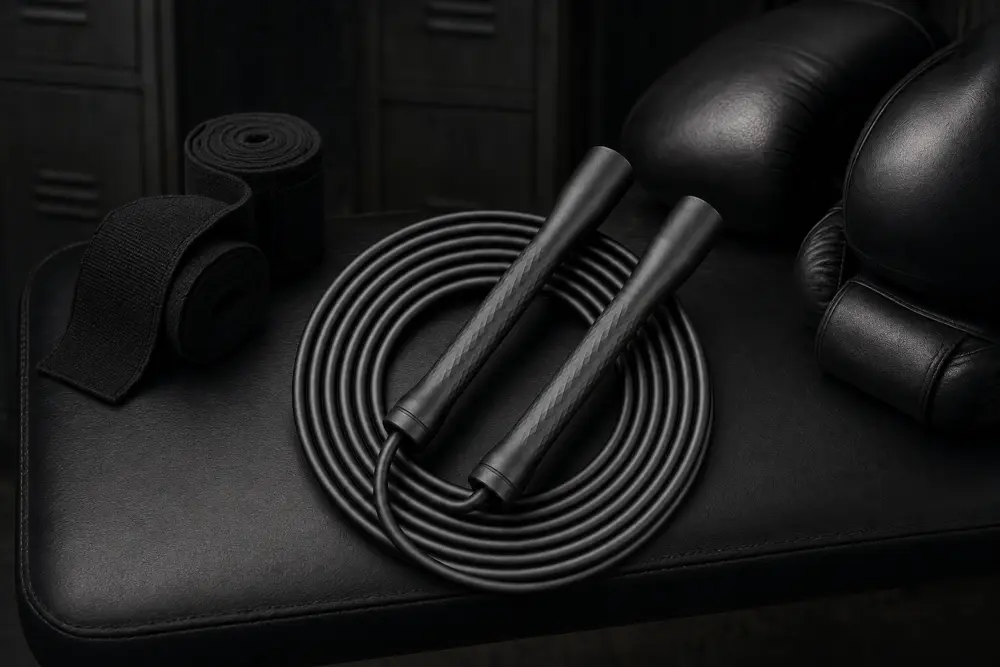
Rubber flooring is the answer if you get to choose, which is why almost every boxing gym and CrossFit box has it underfoot. It gives enough to take the sting out of repeated landings, stays flat so the cable clears at the same height every turn, and does nothing to the cable itself. A mat laid over hardwood gets you most of the way there for a fraction of the effort, and it is the quietest option in the list.
Concrete: fine for your session, expensive for your cable
Garage slabs and driveways are where a lot of home training actually happens, so this deserves a straight answer rather than a warning label. You can run a session on concrete. Plenty of people do, and the rope will not break because of it.
What concrete does is sand the cable. Every rotation drags a length of it across a rough mineral surface under load, and a heavier cable presses harder than a light one, so it happens faster than experience with a plastic speed rope would suggest. The fix is not to avoid the garage — it is to put something between the two. A mat, a scrap of rubber matting, even a strip of old gym flooring wide enough to cover the cable's arc takes that wear out of the equation and softens the landings at the same time.
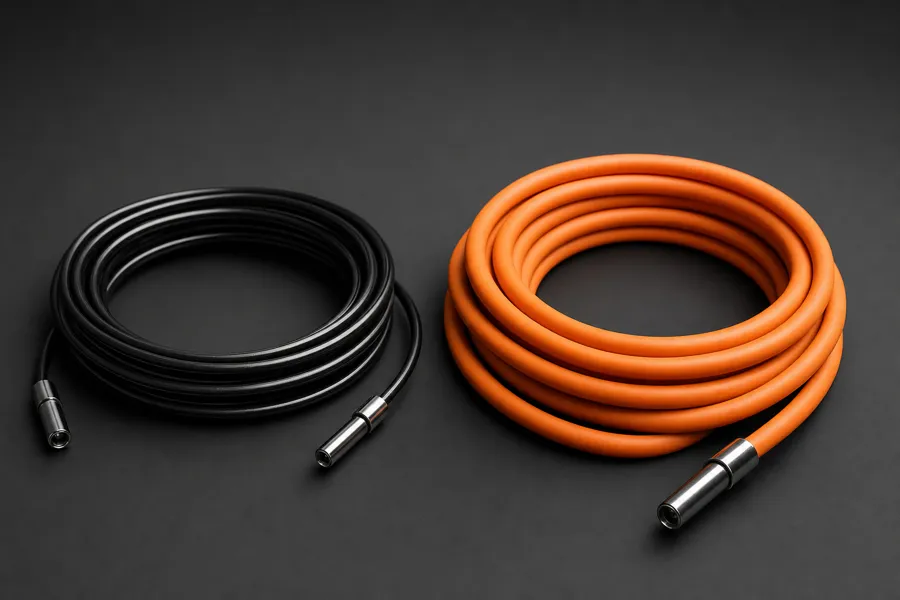
There is a second reason to bother. The Ironpace rope ships with two cables in the case, and the thin one is the one you want intact for speed and skill work — the cable our double unders guide points people toward. If you train on bare concrete anyway, run the thick cable there and keep the thin one for kinder surfaces. Which cable does what is laid out in our guide to choosing your cable.
How much floor space you actually need
Jumping rope has a small footprint, which is most of its appeal. You do not travel. What you need is clearance at the sides, because the cable bows out well past your shoulders at the bottom of each turn, and clearance behind you at the top. A corner works. A patch between a bed and a wall usually does not, because one side is closed off and the cable will find it.
Check it before you commit rather than during a set. Hold both handles and turn the rope slowly through several full rotations at walking pace, watching where the cable passes. Anything it brushes at slow speed is something it will hit hard at full speed — and a heavier cable that catches a shelf edge takes the shelf's contents with it.
Ceiling height, and the test that settles it
Overhead clearance is the most common thing that stops an indoor session before it starts, and you can settle it in about five seconds without measuring anything. Stand where you plan to train and raise one arm straight above your head. That is roughly where the rope passes. Now account for your jump — a rope only needs an inch or two of ground clearance, as our beginner's guide covers, so it is a smaller addition than most people assume. If your fingertips have daylight above them, you are fine.
Basements, garages with exposed joists, and rooms with a low light fitting are the usual problem spots, and the fix is normally a step to one side rather than a different room. Where the clearance genuinely is not there, that is the session to spend on the footwork and conditioning patterns in our workout routines guide, saving rope work for the room with the headroom.
Training indoors without shaking the room
This is the question that comes up most from apartment dwellers, and it has a real answer. Noise from rope work is not the cable — it is your landings, transmitted through the floor into the structure. Three things cut it down substantially.
The first is a mat: anything with density underfoot absorbs the strike before it reaches the floor, and it is the single biggest difference you can make. The second is how you land — coming down on the balls of your feet, staying soft through the ankle and knee, and keeping the jump low turns a thud into a tap, which happens to be better technique regardless of who lives downstairs. The third is structure: short rounds with rest between them, the way the beginner block in our routines guide is built, spread the noise into bursts instead of a continuous drumming. Placement helps too — floors are stiffest where they meet load-bearing walls, so training near a wall rather than dead centre puts less flex into the span.
Outdoors, and what the seasons change
Outdoor rope work is genuinely good, and the surface question just shifts. Short packed grass and a park path in dry weather both land softly and cost the cable nothing. Wet grass is the one to skip, since the cable picks up moisture and grit and carries both back into the handle where the bearing lives.
Cold weather changes two things worth planning around. Cables stiffen when cold and take a few dozen turns to settle back to their normal feel, so the first minute outdoors in winter will not feel like the rope you put away in September — that is temperature, not the rope. And cold hands grip harder than warm ones, which quietly fatigues the forearms faster. Both point to the same adjustment: warm up indoors and start on the lighter setup. This is also where the carry case earns its keep, since both cables and any weight pulled from the handles travel together instead of knotting through a gym bag.
Setting up a spot you will come back to
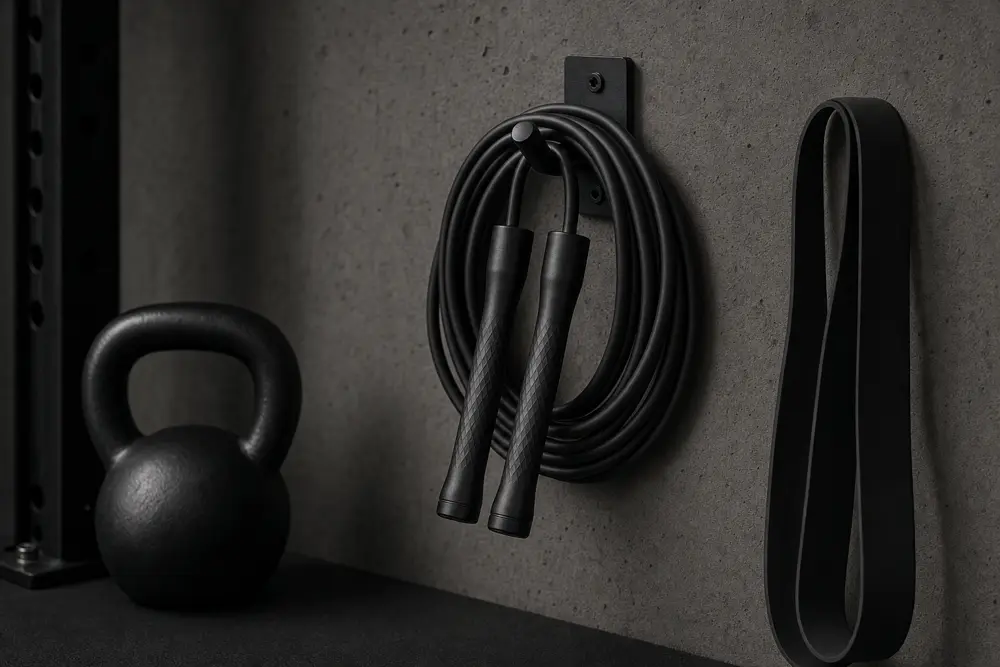
The setups that survive past week three have one thing in common: the rope lives where the training happens. A hook on the wall in the corner you cleared, the case under it, mat already down. Sessions that need ten minutes of furniture-moving before they start are the ones that quietly stop happening in November.
So pick the corner with the best floor and the most headroom, even if it is not the room you pictured training in. Put something forgiving underfoot — a mat solves landings, noise, and cable wear in one move. Run the slow-rotation check once so you know where the cable goes. After that the only variable left is which cable and how much handle weight, and that is a training decision rather than a room decision.
Home gyms, garages, and gym bags come up constantly in verified feedback, and the case is mentioned nearly as often as the rope. One verified buyer put it plainly: "The carrying case makes it easy to toss in my gym bag between sessions." Another, on the part that matters most for daily use on rough ground: "Bearing rotation is excellent, no snag and no catch, even after a few weeks of daily footwork drills."
Verified buyer reviews on file for this rope
— Ironpace order history, 2026
Average rating across those verified purchases
— Ironpace verified buyer feedback, 2026
Units sold to date
— Ironpace sales data, 2026
Full write-ups are on our reviews page. Get the spot right and the Ironpace Dual Cable System does what it is built to do wherever you put it — $49.95, free shipping, and a 30-day money-back guarantee under our refund policy.
Surface and space FAQ
What surface is best for a weighted jump rope?
A firm surface with a little give: a rubber gym floor, a mat laid over hardwood, or short packed grass. You want it flat and level so the cable clears evenly, and forgiving enough that repeated landings do not all go straight into your calves and shins.
Can you use a weighted jump rope on concrete?
Your feet can handle it in short rounds, but the cable pays for it. A garage slab or a driveway sands the cable a little on every rotation, and a heavier cable presses harder into the ground than a light one. Lay a mat down if concrete is the only floor you have.
How much ceiling height do you need to jump rope?
Stand where you plan to train, raise one arm straight overhead, and add the height of your jump — an inch or two off the ground is enough clearance underfoot. If your hand has room to spare above your head, the rope will clear. Test it with slow turns before you go to full speed.
Can you jump rope in an apartment?
Yes, with the right floor and a quiet landing. A mat over the floor absorbs most of the thud, and landing on the balls of your feet rather than flat-footed keeps the impact from carrying through the structure. Short rounds with rest between them also spread the noise out.

Derek Malone · Strength coach & product lead at Ironpace
Derek has coached boxing and CrossFit conditioning for over a decade.